Episode 36: How Do We Do Worldschooling in Vietnam?
In this episode of the Worldschooling Q&A Podcast, Astrid and Clint share their experience with worldschooling in Vietnam.
Worldschooling Q&A Podcast - Episode 36
Hosts: Astrid & Clint, creators of The Wandering Daughter
Title: Episode 36: How Do We Do Worldschooling In Vietnam?
This post may contain affiliate links. That means I may receive a small commission if you click on the link and purchase something. But don't worry, this will not result in any extra costs to you.
Worldschooling podcast episode summary
This week, we dive into one of the most memorable stops in our four years of full-time worldschooling: Vietnam. With a candid heads-up that our time there overlapped with the start of the COVID-19 pandemic, we share what it was actually like to arrive in Hanoi in February 2020, explore the country for three months, and eventually scramble to find a flight home.
Our honest, grounded account covers logistics like visas, transportation, currency, and internet access, alongside deeper observations about Vietnam's communist government, its street-level entrepreneurial culture, and the challenges of navigating a tonal language with zero proficiency.
The episode is packed with practical worldschooling angles, from boat tours through Ha Long Bay and bike tours in Ninh Binh to food tours in the old quarter that open the door to dishes like Bun Cha Hanoi and egg coffee. We also reflect on what we noticed about community and cafe culture in Hanoi, how the pandemic made that vibrant street life suddenly invisible, and what a worldschooling family visiting Vietnam today should prioritize. If Vietnam is on your family's list, this episode is a solid, real-talk starting point.

Worldschooling consultations
Meet with Clint and Astrid for personalized help with your worldschooling plan.
5 fun activities for worldschooling in Vietnam
Worldschooling in Vietnam offers families plenty of opportunities to learn and experience Vietnamese culture. Here are five things families can't miss.
- Take a food tour in Hanoi
- Take a Ha Long Bay day cruise
- Visit the beautiful rivers and caves of Ninh Binh
- Take a cooking class in Hoi An
- Visit the iconic Golden Hand Bridge near Da Nang
Getting started with worldschooling in Vietnam
Vietnam is a genuinely exciting destination for worldschooling in Vietnam, and for good reason. The country combines ancient history, a living street culture, and incredible food into something that is hard to replicate anywhere else.
But there are a few logistics to sort out before you go, and the country itself offers some fascinating context for curious families.
Getting there: flights, visas, and entry logistics
Vietnam has two main international airports: one in Hanoi in the north, and one in Ho Chi Minh City (also known as Saigon) in the south. Most families flying in from abroad will use one of these two entry points.
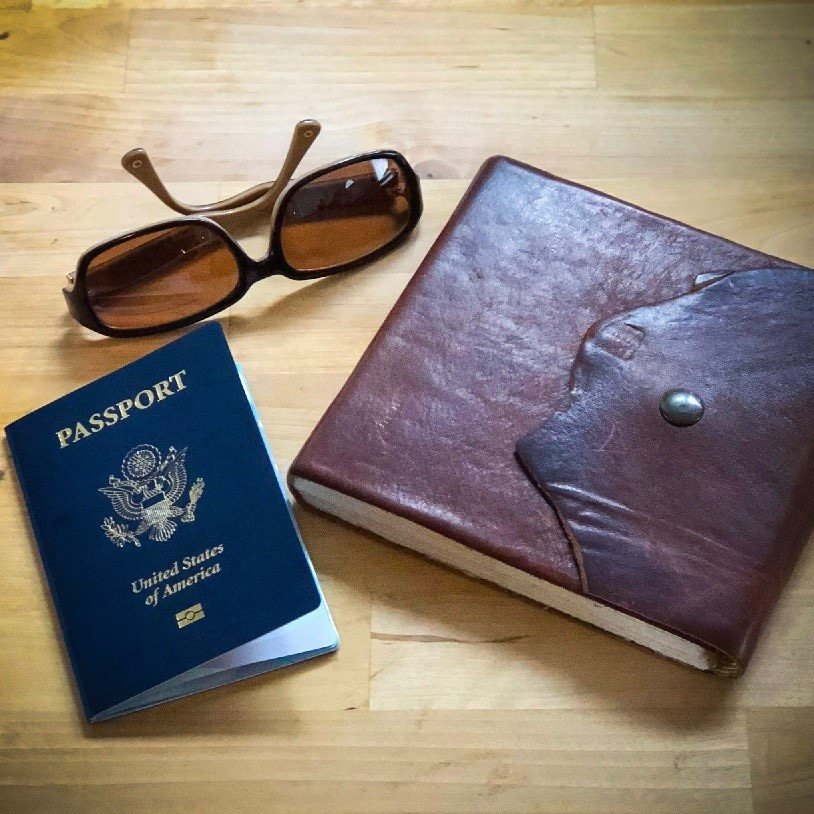
Vietnam does require a visa, and we applied for ours online before arriving, submitting passport information and photos in advance. The visa was issued upon entry.
We were granted a 90-day visa, which gave us plenty of time to settle in and explore. If you are worldschooling in Vietnam long-term, that 90-day window is a helpful starting point for planning.
Ready for a change? Take the first step to living a life of full time travel.
Vietnam's government, economy, and daily life
Vietnam is a communist country, and that was something we noticed from the start. Monuments and imagery honoring Ho Chi Minh are visible throughout Hanoi.
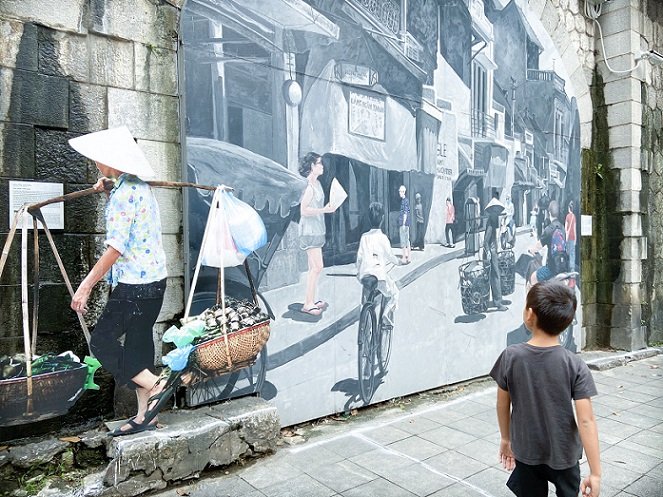
That said, daily life felt deeply entrepreneurial in practice. Older people selling tea, produce, or snacks from bicycles and storefronts were a common sight, and we learned that this kind of small-scale income generation is tied to how the tax structure works for elderly citizens.
These layered observations sparked real conversation among our family about how governments and economies work. That made it a meaningful part of worldschooling in Vietnam for our family.
Where and how we spent our time worldschooling in Vietnam
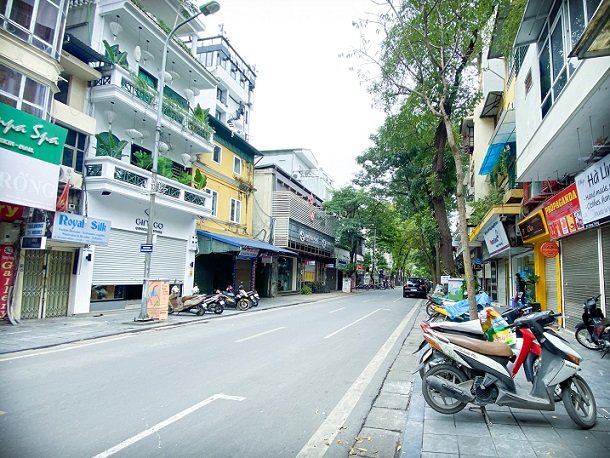
Most of our worldschooling in Vietnam was concentrated in the northern part of the country, largely because the pandemic made travel beyond Hanoi very difficult. But even within that more limited range, we found plenty of rich, hands-on learning experiences.
Ha Long Bay and Ninh Binh
In our first two weeks, before everything shut down, we made it to Ha Long Bay, a bay famous for its dramatic limestone rock formations rising out of the water. We took a boat tour and even went into a cave, which the kids loved.
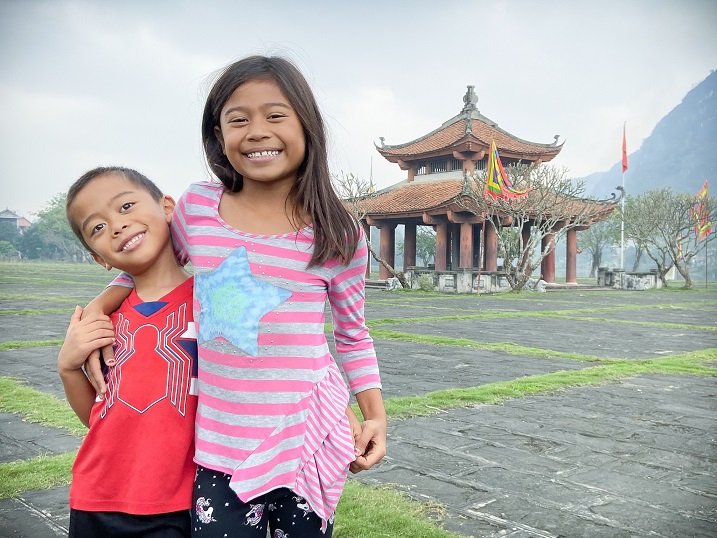
We also visited Ninh Binh, a quieter area known for its flooded rice paddies at the base of the mountains. There, we took a small boat tour rowed by a local guide who used her feet to paddle, and we also did a bike tour through the town, with our kids riding along with us.
These kinds of hands-on, place-based experiences are exactly what makes worldschooling in Vietnam so worthwhile.
Get prepared for any emergency with the insurance made for digital nomads!
Hanoi's old quarter and city life
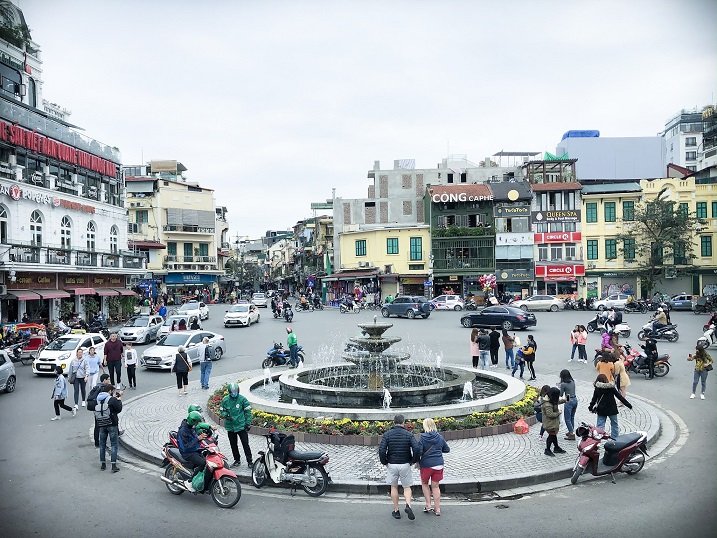
Hanoi itself was a highlight. The old quarter has a layered architectural history that reflects centuries of Chinese occupation followed by about 100 years of French influence. Walking through its small alleys felt like moving through living history.
Beyond the old quarter, Hanoi is also a bustling modern city with large mall complexes that serve as community hubs, complete with grocery stores, bowling alleys, and ice rinks. We visited several of these both before and after lockdown, and they became an unexpected window into how urban families in Vietnam live day to day, which is a consistent part of what we look for when worldschooling in Vietnam or anywhere else.
The language and culture of worldschooling in Vietnam
One of the most humbling parts of worldschooling in Vietnam was the language. Vietnamese is a tonal language, meaning the same syllable can mean entirely different things depending on whether your tone rises, falls, stays neutral, or curves.
We tried. We watched YouTube videos, practiced with each other, and then attempted to use what we had learned with a neighbor selling tea outside our Airbnb.
She had no idea what we were saying. We were likely saying something unintended, and possibly something rude. In the end, we mastered four words: ice cream (kem), the number four (ba), tea (cha), and thank you (cam on). A lot of pointing happened.
Cafe culture and community life
What we did connect with deeply was the cafe culture. Throughout the day, from morning coffee and sunflower seeds to afternoon tea to evening beers, the cafes in Hanoi's old quarter were full of people. Not just passing through, but sitting, talking, and being together.
It was one of the most communal street-level cultures we have ever experienced in our worldschooling in Vietnam journey. When the pandemic locked things down and the streets emptied, the contrast was striking in a way that would not have been nearly as visible in a city where social life happens mostly indoors. That shift became one of the most memorable lessons of the whole trip.
Learn more about the amazing family travel resources we use for worldschooling!
Food as a worldschooling tool in Vietnam
Food was one of the most educational and memorable parts of our worldschooling in Vietnam experience. We recommend taking a food tour early in your stay in Hanoi.
The variety of dishes and food to eat in Hanoi can be overwhelming without some guidance. A good tour will introduce you to the range of flavors and textures that make Vietnamese cuisine distinct.
Bun Cha Hanoi and the food alley
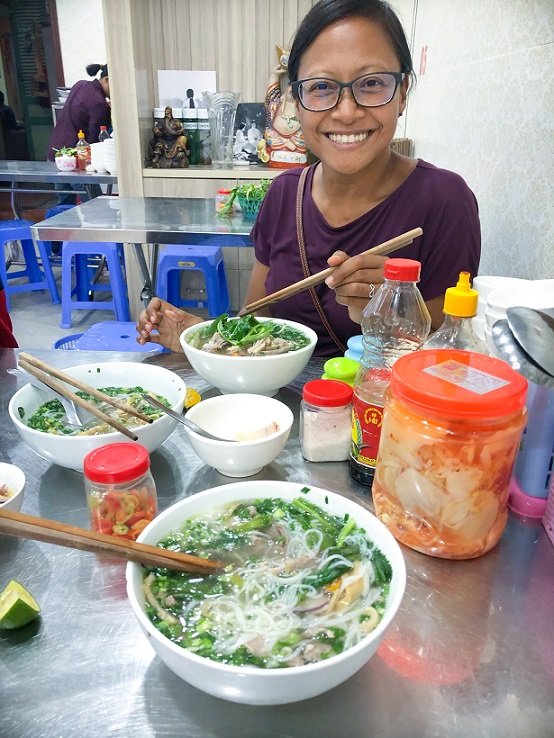
Our favorite dish from the entire trip was Bun Cha Hanoi, a pork-based dish served with ground pork patties, egg rolls, a big bowl of broth, vermicelli noodles, and a generous plate of vegetables. It was discovered on a food tour and cost around two US dollars.
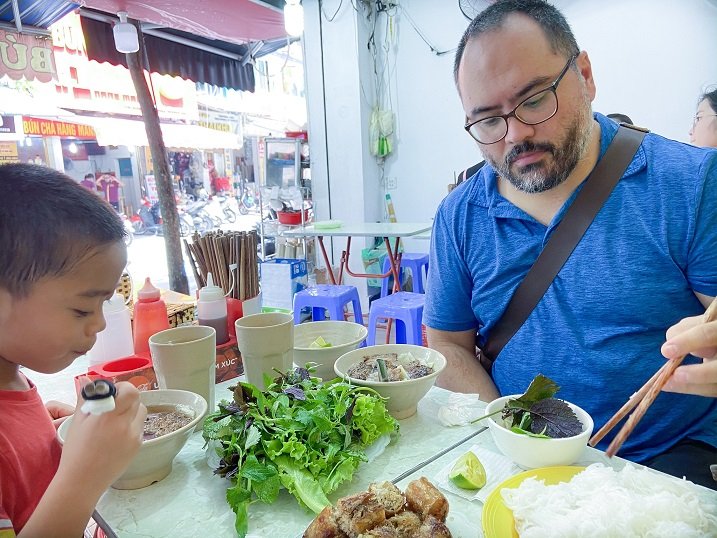
The food alley in the old quarter is also worth the slightly nerve-wracking experience of squeezing through it: a narrow, eight-foot-wide passage packed with food stalls serving dishes like snail soup, crab soup, and hand-rolled noodle wraps. We connected with another worldschooling family whose dad was Vietnamese, and his personal guidance through the food scene was invaluable.
Egg coffee, the currency, and what families should know
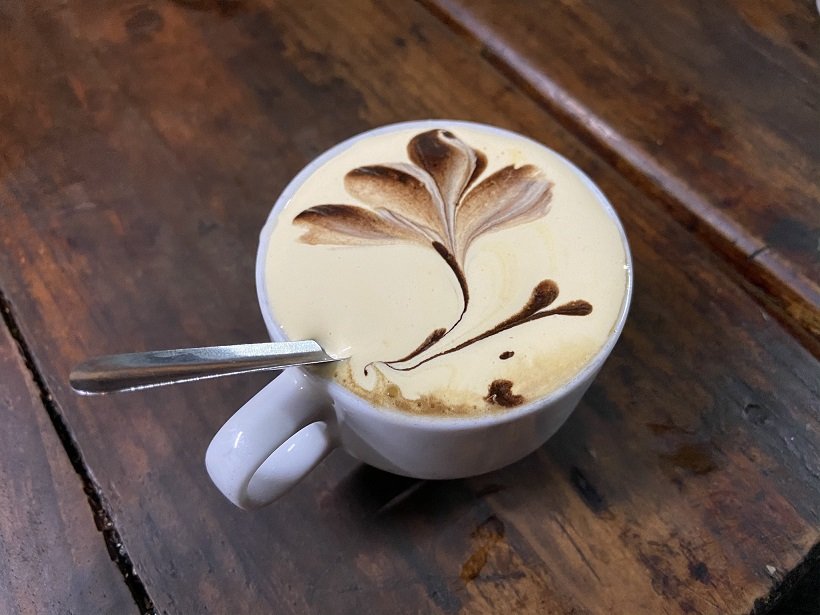
Egg coffee is another must-try when worldschooling in Vietnam. Made by whipping egg whites with sugar to create a thick cream that goes on top of very strong Vietnamese coffee, it has roots in a time when milk was scarce. The history behind it, including the French culinary influence on Vietnamese cooking, made it a genuinely interesting discussion point with the kids.
A few practical notes for families: meals are remarkably affordable, with a bowl of soup costing around two US dollars and a family of four easily eating well for ten. The currency is the Vietnamese dong. The food skews pescatarian, with lots of fresh produce available for families who prefer to cook, though most kitchens come equipped with hot plates rather than ovens.
Submit your worldschooling questions here!
Key topics covered in this episode
Getting there and logistics
- Vietnam has two main international airports: Hanoi in the north and Ho Chi Minh City in the south
- A visa is required and can be applied for online before arrival
- We received a 90-day visa upon entry
- Internet access in Hanoi was strong; Vietnam is a well-known digital nomad hub, especially in southern cities like Danang and Hoi An
- Grab is the main ride-sharing app and also works for food delivery
- Vietnamese dong is the local currency; meals are very affordable

Find the perfect place to stay during your worldschooling adventure through Booking!
Vietnam's government and cultural context
- Vietnam is a communist country with visible government presence, including monuments to Ho Chi Minh
- Despite the communist structure, daily life has a strong entrepreneurial energy, particularly among older residents running small food stalls
- The tax structure for elderly citizens encourages small-scale informal work, which fuels the street food scene
- Hanoi's old quarter reflects layers of Chinese and French historical influence
Language and communication
- Vietnamese is a tonal language, meaning tone determines word meaning
- We tried and largely failed to learn Vietnamese despite genuine effort
- Pointing and gesturing became our primary communication strategy
- The language barrier was one of the most challenging parts of the trip, but also a humbling and memorable worldschooling lesson
Get weekly worldschooling tips sent to your inbox with my Worldschooling Wednesday email series.
Places and highlights
- Ha Long Bay: boat tour through dramatic limestone formations, including a cave visit
- Ninh Binh: foot-rowed boat tour through flooded rice paddies and a bike tour through a small mountain town
- Hanoi old quarter: layered history, walkable alleys, French and Chinese architecture
- Large mall complexes in Hanoi function as community hubs with grocery stores and entertainment
Food and cafe culture
- Hanoi's cafe culture runs all day, from morning coffee to afternoon tea to evening beer, with sunflower seeds a constant companion
- Bun Cha Hanoi: pork-based soup with noodles, broth, egg rolls, and vegetables, around two US dollars a bowl
- Egg coffee: a Vietnamese specialty with historical roots in a milk shortage, now somewhat touristic but worth trying
- A food tour in Hanoi's old quarter is highly recommended as an entry point to the cuisine
- The food scene is pescatarian-friendly but not very vegan or vegetarian friendly when eating out
- Cooking at home is possible given the abundance of fresh produce, but kitchens typically only have hot plates
The pandemic context
- We arrived in February 2020, just before COVID-19 restrictions began
- We had intended to travel both north and south Vietnam but ended up staying in Hanoi for three months
- The contrast between the vibrant street life we first experienced and the empty streets during lockdown was one of the most striking observations of the trip
- We eventually left in May 2020, after scrambling to find a flight home
Episode Chapters
00:00:00 - Introduction
00:00:28 - This is Worldschooling Q&A: welcome and show intro
00:00:56 - Today's question: how do I worldschool in Vietnam?
00:02:22 - Getting there: flights, visas, and logistics
00:03:33 - Government, culture, and working remotely in Vietnam
00:05:58 - Currency, affordability, and the Vietnamese language
00:06:55 - Source of Intro Clip: trying (and failing) to learn Vietnamese
00:09:25 - Getting around: Grab and transportation options
00:09:45 - Highlights: Ha Long Bay, Ninh Binh, and Hanoi's old quarter
00:17:28 - Cafe culture, community life, and the pandemic contrast
00:20:25 - Food: egg coffee, Bun Cha Hanoi, food tours, and what to know
00:30:34 - Outro and closing
Further worldschooling resources