
Episode 43: What Are The Emotional Benefits of Travel For Kids?

In this episode of the Worldschooling Q&A Podcast, Astrid and Clint discuss the emotional benefits of travel for kids and how to help kids feel emotionally secure while traveling full time.
Worldschooling Q&A Podcast - Episode 43
Hosts: Astrid & Clint, creators of The Wandering Daughter
Title: Episode 43: What Are The Emotional Benefits of Travel For Kids?
This post may contain affiliate links. That means I may receive a small commission if you click on the link and purchase something. But don't worry, this will not result in any extra costs to you.
Worldschooling podcast episode summary
This episode looks at one of the questions we get asked most: what are the emotional benefits of travel for kids, and how do we actually build them on the road? For us, the emotional benefits of travel come down to three things. Stability, safety, and confidence.
We have talked in past episodes about logistics and scenario planning, but this time we wanted to focus specifically on our kids' inner experience. As a family that has spent years moving between countries, we have had to be intentional about the emotional benefits of travel rather than assuming they happen automatically.
We cover the practical side too. Routines like shared breakfasts and grocery runs, a travel world map we tack up in every rental, and small independence exercises like sending kids into a shop alone. Each of these is a concrete way we have built the emotional benefits of travel into ordinary days.

Worldschooling consultations
Meet with Clint and Astrid for personalized help with your worldschooling plan.
This episode is for any worldschooling parent who wonders whether constant movement is hard on kids emotionally. We think the emotional benefits of travel are real, but they take deliberate effort, and we share exactly what has worked for our family.
The emotional benefits of travel that come from stability and routine
One of the clearest emotional benefits of travel, at least the way we approach it, comes from keeping small routines the same even when the location changes constantly. Stability does not mean staying in one place. It means finding anchors that travel with you.
Breakfast routines and grocery store rituals
We almost always eat breakfast at home before heading out for the day. And more often than not, it is usually some version of the same thing: cereal, or eggs and toast, plus whatever fresh fruit is local.
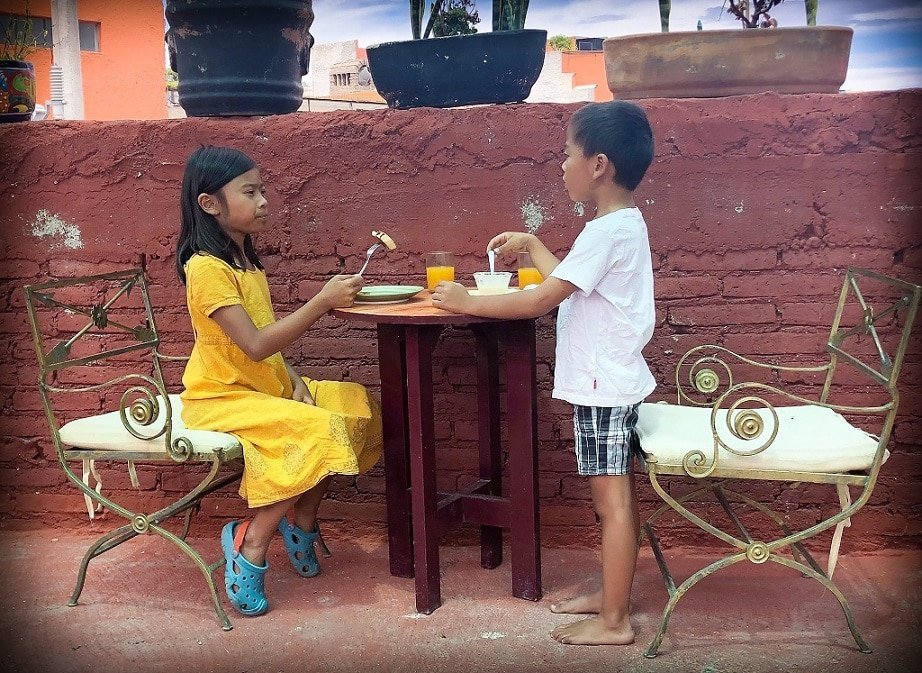
Our kids even have a running joke that Clint makes the best egg in the nest, toast with a hole torn in the middle and an egg yolk cooked into it, and it has become our travel breakfast go-to.
Grocery shopping is another routine that repeats everywhere we go. The location changes, but the experience of picking out food together does not, and that repetition is one of the quieter emotional benefits of travel for our kids.
A travel world map that makes any room feel like home
We picked up a trick from another worldschooling mom: we traveled with a giant world map, actually an old tablecloth, and tacked it up on the wall of wherever we were staying. Finding a spot for that map became a ritual in itself.
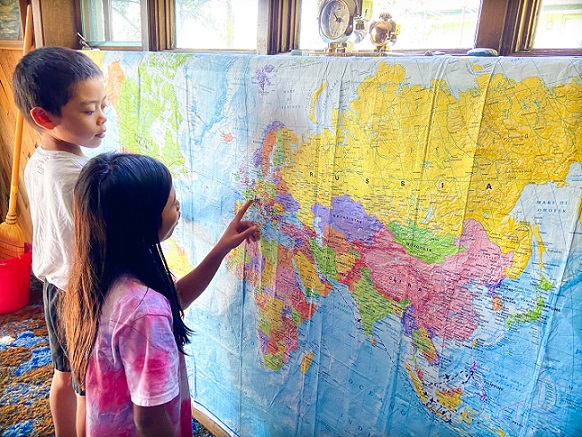
It turned temporary lodging into a space that felt like ours, which is one of the more tangible emotional benefits of travel when you never sleep in the same bed for long. We also carried small dry-erase boards for schedules and lists, which served the same purpose.
Malls, movies, and other familiar comforts abroad
Pop culture matters a lot in our house. We travel with a Bluetooth speaker for music and a Roku device so we can access our usual streaming platforms wherever we land.
Malls turned out to be an unexpected source of the emotional benefits of travel too, since they are structured similarly almost everywhere. We ducked into malls to cool off on a hot day in India, and did the same in Vietnam, Spain, and London. Knowing there would be food, air conditioning, and a play structure gave the kids a predictable reset button.
Ready for a change? Take the first step to living a life of full time travel.
The emotional benefits of travel that come from feeling safe
Safety splits into two pieces for us: physical safety, which we have covered in past episodes through scenario planning and safe words, and emotional safety, which is where a lot of the deeper emotional benefits of travel actually come from.
Raising curious, non-judgmental kids abroad
When kids are exposed to unfamiliar food, appearances, or customs, they are just processing what they see out loud, often without the biases adults carry. We try to make space for those observations without judgment, then address them objectively rather than imposing our own reactions.

That openness is part of what makes the emotional benefits of travel possible in the first place. Kids only share honestly when they trust they will not be corrected or shamed for it.
Building a curiosity-driven, non-punitive household
Astrid grew up in a household where parents were treated as the ultimate authority. As a parent, she has worked hard to do the opposite with our own kids: learning from them as much as they learn from us.
Get weekly worldschooling tips sent to your inbox with my Worldschooling Wednesday email series.
We run a curiosity-driven home, which gives our kids room to be creative and ask questions. That foundation of emotional safety is one of the emotional benefits of travel that shows up long before kids ever leave the house.
Modeling vulnerability as parents
Kids feel more emotionally secure when they see their parents be honest about hard feelings too. Clint has told our kids directly that a chaotic, touristy airport gets to him and that he finds it overwhelming.
Naming that out loud, instead of pretending to be unbothered, models the same vulnerability we hope our kids will show us. It is part of how the emotional benefits of travel flow in both directions in our family.
The emotional benefits of travel that build real confidence
Confidence is the third piece, and it looks different for full-time traveling kids than it does for kids in a traditional school setting. Traditional school forces some independence simply because parents are not in the room. Full-time travel means parents usually always present. That means have to build in confidence deliberately.
Ordering meals and navigating airports on their own
We started small: encouraging our kids to order their own food at a restaurant, first in English, then in whatever language we were currently using. Our kids are now comfortable ordering in Spanish because of that repetition.
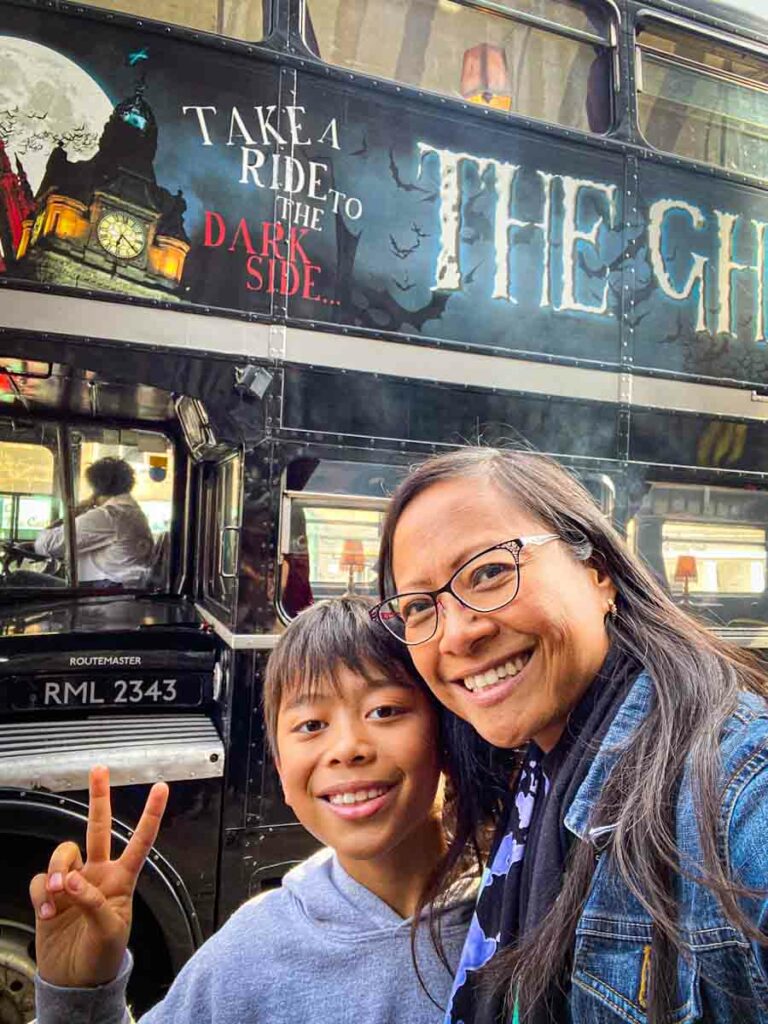
Astrid does something similar at airports, pointing out the gate number on the ticket and letting the kids find the way there themselves. Both are small, low-stakes ways to practice the emotional benefits of travel that come from being trusted with a task.
Small independence moments in Bali and Spain
While staying in a villa in Bali next to a convenience store, we would send the kids next door on their own to buy something for us. They loved feeling grown up enough to handle the money and the purchase.
In Spain, once the kids were in sight of our apartment building, we sometimes let them walk the rest of the way alone. Or sometimes we watched from the window as they walked to the grocery store and back by themselves in a Spanish-speaking neighborhood. Those moments of visible pride afterward are some of the clearest emotional benefits of travel we have seen firsthand.
Get prepared for any emergency with the insurance made for digital nomads!
Encouraging solo travel and language confidence
Astrid's longer-term goal is for each of our kids to eventually feel confident enough to travel solo, the way she encourages girls specifically not to let fear of the world hold them back. Our daughter has already said she wants to take a gap year after high school, which is exactly the kind of independence the emotional benefits of travel are meant to build over time. We also saw this recently in Indonesia, where our daughter practiced ordering in Indonesian and came back glowing because a shopkeeper thought she was a local.
Submit your worldschooling questions here!
Key topics covered in this episode
Defining emotional security while traveling
- Stability, safety, and confidence are the three pillars we focus on
- Emotional security means feeling safe enough to express needs and feelings
- The emotional benefits of travel take deliberate effort, not just time on the road
Routines that create stability
- Consistent breakfast routines, including our "egg in the nest" tradition
- Grocery shopping as a repeated, grounding ritual in every new location
- Bedtime stories and shared mealtimes as smaller stability anchors

Find the perfect place to stay during your worldschooling adventure through Booking!
Creating a sense of home on the move
- A tablecloth-turned-world-map tacked up in every rental
- Small dry-erase boards for schedules and lists
- Malls, movies, and familiar pop culture as emotional reset points abroad
Emotional safety and non-judgmental parenting
- Encouraging kids to voice observations about new cultures without judgment
- Addressing bias objectively instead of imposing parental reactions
- Building a curiosity-driven household that rewards questions
Modeling vulnerability as parents
- Being honest with kids about feeling overwhelmed, like in busy airports
- Vulnerability from parents encourages the same openness in kids
- Emotional safety flows both directions in the family
Building confidence through independence
- Encouraging kids to order food for themselves, first in English, then in a new language
- Letting kids navigate airport gates and find their own way
- Small errands, like walking to a convenience store or grocery store alone
Learn more about the amazing family travel resources we use for worldschooling!
Encouraging solo travel for the future
- Exposure to planes, trains, ferries, scooters, and rental cars builds transportation confidence
- Astrid's mission to raise girls unafraid of solo travel
- Our daughter's own plan to take a solo gap year after high school
Episode chapters
00:00:00 – Introduction
00:00:20 – Astrid Welcomes Listeners to World Schooling Q&A
00:01:00 – Today's Question: How Do You Help Kids Feel Emotionally Secure While Traveling?
00:01:19 – Defining Emotional Security: Stability, Safety, and Confidence
00:02:52 – Coping With Instability: Keeping Routines on the Road
00:03:54 – Breakfast Routines and Grocery Store Rituals
00:04:36 – ↩ Source of Intro Clip: The "Egg in the Nest" Breakfast Tradition
00:05:11 – Creating a Sense of Home With a Travel World Map
00:06:31 – Familiar Comforts: Malls, Movies, and Pop Culture Abroad
00:07:54 – Emotional Safety and Non-Judgmental Parenting
00:11:06 – Building Confidence Through Independence and Solo Travel
00:20:45 – Outro: Thanks for Listening and Where to Find Us
Further worldschooling resources
- 5 Great Reasons to Travel with Kids: Benefits of Travelling With Family
- 9 Easy Tips to Help Your Child Become an Avid Traveller
- 5 Easy Tips For Teaching Girls To Be Bold Travelers: Raising Brave Kids


