Episode 15: What Are The Best WiFi Options For Worldschooling?
In this episode of Worldschooling Q&A, Astrid and Clint share their take on the question: What are the best WiFi options for worldschooling?
Worldschooling Q&A - Episode 15
Hosts: Astrid & Clint, creators of The Wandering Daughter
Title: Episode 15: What Are The Best WiFi Options For Worldschooling?
Episode Summary
In this episode of Worldschooling Q&A, Astrid and Clint tackle one of the most critical topics for traveling families who work or learn remotely: reliable WiFi on the road.
Drawing from years of full-time travel across 18+ countries, we share real-world experiences—from stunning Italian farmhouses with unusable internet to total digital dead zones that forced last-minute relocations. This episode breaks down practical WiFi strategies every worldschooling or digital nomad family should understand before hitting the road.
We cover international cell phone plans, local SIM cards, hotspots, Starlink, and how to properly vet Airbnb WiFi before booking. You’ll also learn why having a backup plan (and a backup to that backup) is essential, plus how tools like VPNs and travel routers can protect your data and improve connection stability.
Whether you’re working remotely, homeschooling online, or just trying to stay connected while traveling, this episode offers realistic guidance to help you avoid common WiFi pitfalls and stay productive anywhere in the world.
Building reliable internet into your worldschooling plan
Strong internet access can make or break a worldschooling rhythm, especially when parents work remotely and kids rely on online resources. In our podcast episode, we focus on mindset and planning, and why thinking through WiFi options for worldschooling before you arrive matters just as much as choosing the destination itself.
Get prepared for any emergency with the insurance made for digital nomads!
Why internet access is part of responsible planning
When we talk about WiFi options for worldschooling, we are really talking about responsibility and flexibility. Reliable internet supports paid work, communication with family back home, and access to learning tools. Without intentional planning around WiFi options for worldschooling, stress can creep in fast and take away from deeper connection with a place.
Learning from imperfect stays
One of our biggest lessons around WiFi options for worldschooling came from a beautiful farmhouse stay in Italy. The setting was unforgettable, but the internet was unreliable and inaccessible. Experiences like this reminded us that WiFi options for worldschooling are not about perfection. They are about asking better questions and having realistic expectations.

Planning with curiosity instead of assumptions
Many accommodations advertise WiFi, but that label alone does not guarantee it will support work or learning. Asking detailed questions ahead of time is now part of how we approach WiFi options for worldschooling. This planning step allows us to arrive curious and prepared, instead of scrambling once we are already on the ground.
Phone-based internet and backup plans
Every worldschooling setup needs more than one solution. During our podcast episode, we talk about how we layer our internet access so that our WiFi options for worldschooling do not rely on a single fragile connection.
Starting with your home cell plan
A solid international phone plan is often the first layer of WiFi options for worldschooling. Before leaving, we always review our home provider’s international policies, limits, and terms of service. This foundation gives us peace of mind, even if it is not our primary source of WiFi options for worldschooling long term.
Ready for a change? Take the first step to living a life of full time travel.
Understanding data limits and cutoffs
One surprise for many traveling families is that long-term use abroad can trigger data restrictions. Knowing this ahead of time helps you rotate and reset WiFi options for worldschooling instead of losing access unexpectedly. Reading the fine print is part of responsible travel planning.
Always having a backup to the backup
If remote work is non-negotiable, redundancy matters. We learned quickly that WiFi options for worldschooling should include multiple layers. Cell data, accommodation WiFi, and local solutions all work together. This approach reduces anxiety and keeps learning and work routines steady.
Evaluating WiFi at your accommodation
Your lodging plays a huge role in daily rhythm. This section focuses on how to realistically evaluate WiFi options for worldschooling when choosing where to stay.
Asking hosts the right questions
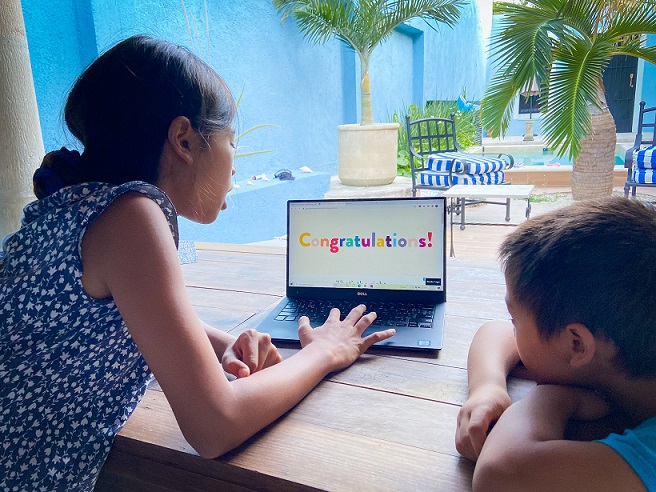
After a few hard lessons, we now always ask for WiFi speed details before booking. Screenshots of speed tests are part of how we evaluate WiFi options for worldschooling. Being transparent about your needs helps hosts respond honestly and helps you avoid mismatched expectations.
When advertised WiFi does not exist
Sometimes WiFi options for worldschooling fall apart entirely. We once arrived at a rental that claimed internet access, only to discover a complete dead zone with no cell service either. In that case, leaving was the most responsible choice. Flexibility is part of making WiFi options for worldschooling work.
Short stays versus long stays
For stays under two weeks, we may rely more heavily on existing WiFi and cell data. For longer stays, we invest more time in securing stable WiFi options for worldschooling. Length of stay influences how much setup effort makes sense.

Find the perfect place to stay during your worldschooling adventure through Booking!
Using local SIM cards as a key tool
Local connectivity can be a game changer. One of the things we talk about in our worldschooling podcast episode is how local SIM cards fit into broader WiFi options for worldschooling.
Why local SIM cards matter
Local SIM cards often provide faster and more reliable data than roaming plans. For us, they are an essential part of our WiFi options for worldschooling when staying in one place for an extended period. They also help us navigate daily life, not just work.
Navigating refills and local systems
Each country handles refills differently, and some systems are more complex than others. Understanding how to top up your data is part of managing WiFi options for worldschooling responsibly. We have learned to ask locals or shop attendants for guidance early.
Integrating local data into daily routines
Once set up, local SIM cards become part of everyday flow. They support maps, communication, and learning resources. As part of our overall WiFi options for worldschooling, they give us flexibility to work from different spaces instead of being tied to one room.

Using an eSIM
If your phone supports an eSIM, you can consider a service such as aloSIM, which offers eSIM cards for over 200 countries around the world. While the price of the eSIM is more expensive than if you were to get a local SIM, this saves you from the hassle of trying to find a place to get a local SIM, because you can set it up before your trip. Use our referral code, MRE7OV5, to get a $3 credit on your first purchase.
A grounded approach to connectivity
Internet access is not the heart of worldschooling, but it supports everything else. During our podcast episode, we talk about how we tie together the various WiFi options for worldschooling into a values-driven travel lifestyle.
Balancing presence and practicality
We do not want screens to dominate our days, but we also honor the realities of work and learning. Thoughtful WiFi options for worldschooling allow us to be present without constant stress about connectivity.

Get weekly worldschooling tips sent to your inbox with my Worldschooling Wednesday email series.
Teaching kids adaptability through challenges
When WiFi options for worldschooling fail, kids see real-life problem solving in action. They learn flexibility, communication, and patience. These moments become part of learning, not interruptions to it.
Seeing connectivity as a tool, not a focus
When connectivity works, families can focus on community, learning, and responsibility. That balance is what makes worldschooling sustainable over time.
Submit your worldschooling questions here!
Episode Guide
The importance of reliable internet for worldschooling
- Remote work depends on stable access
- Learning often requires online tools
- Internet impacts daily family rhythm
Always having backup internet plans
- Backup to the backup mindset
- Internet failures are common
- Reduces stress during work calls
Lessons from poor WiFi experiences
- Beautiful stays can still fail technically
- Italy farmhouse WiFi challenges
- Physical buildings can block signals

Using mobile phone plans internationally
- Home plans as first line of access
- Google Fi, T-Mobile, Verizon mentioned
- Terms of service matter long term
Understanding data limits and restrictions
- Long-term travel can trigger cutoffs
- Monthly resets versus full shutdowns
- Planning avoids sudden loss of service
Evaluating WiFi at accommodations
- Asking hosts about speeds
- Requesting screenshots of speed tests
- Being upfront about work needs
When advertised WiFi does not work
- Hosts may overestimate connectivity
- Some locations are total dead zones
- Sometimes leaving is necessary
Deciding when to get a local SIM card
- More useful for longer stays
- Adds flexibility and reliability
- Works alongside home plans
Using eSIMs and physical SIM cards
- Dual SIM phones are helpful
- eSIM for home plan
- Physical SIM for local data
Learn more about the amazing family travel resources we use for worldschooling!
Challenges with refilling local data
- Country-specific refill systems
- Can be confusing and time-consuming
- Important to ask how refills work
Internet as part of flexible travel planning
- Connectivity is not guaranteed everywhere
- Requires adaptability and patience
- Supports, not defines, worldschooling
Chapters
00:00:00 – Introduction
00:01:04 – Today’s Question: What are the best Wi-Fi options for worldschooling families?
00:02:00 – Why reliable internet matters for remote work and learning
00:03:26 – Airbnb Wi-Fi realities & asking the right questions before booking
00:04:30 – Cell phone plans for international travel (Google Fi, T-Mobile & more)
00:05:35 – Backup plans: hotspots, dead zones & real-world travel mishaps
00:06:35 – Local SIM cards, eSIMs & hotspot considerations
00:07:39 – Portable hotspots, Starlink & satellite internet options
00:08:49 – Public Wi-Fi, co-working spaces & VPN security tips
00:10:14 – Travel routers, final advice & staying connected on the road

Further worldschooling resources
- International WiFi Options for Working Nomads and Travelers
- Best Travel WiFi Router (And 7 Tips for How To Use A Portable Router)
- 6 Useful Tips For Keeping In Touch With Family During Travel
Support the podcast
- Join The Wandering Daughter on Patreon for episode transcripts, extra resources, and live office hours with Astrid and Clint.
- Follow and subscribe on Spotify, Apple Podcasts, and YouTube.
- Leave a five-star review to help others discover the podcast.
- Submit your worldschooling questions to our podcast page.